

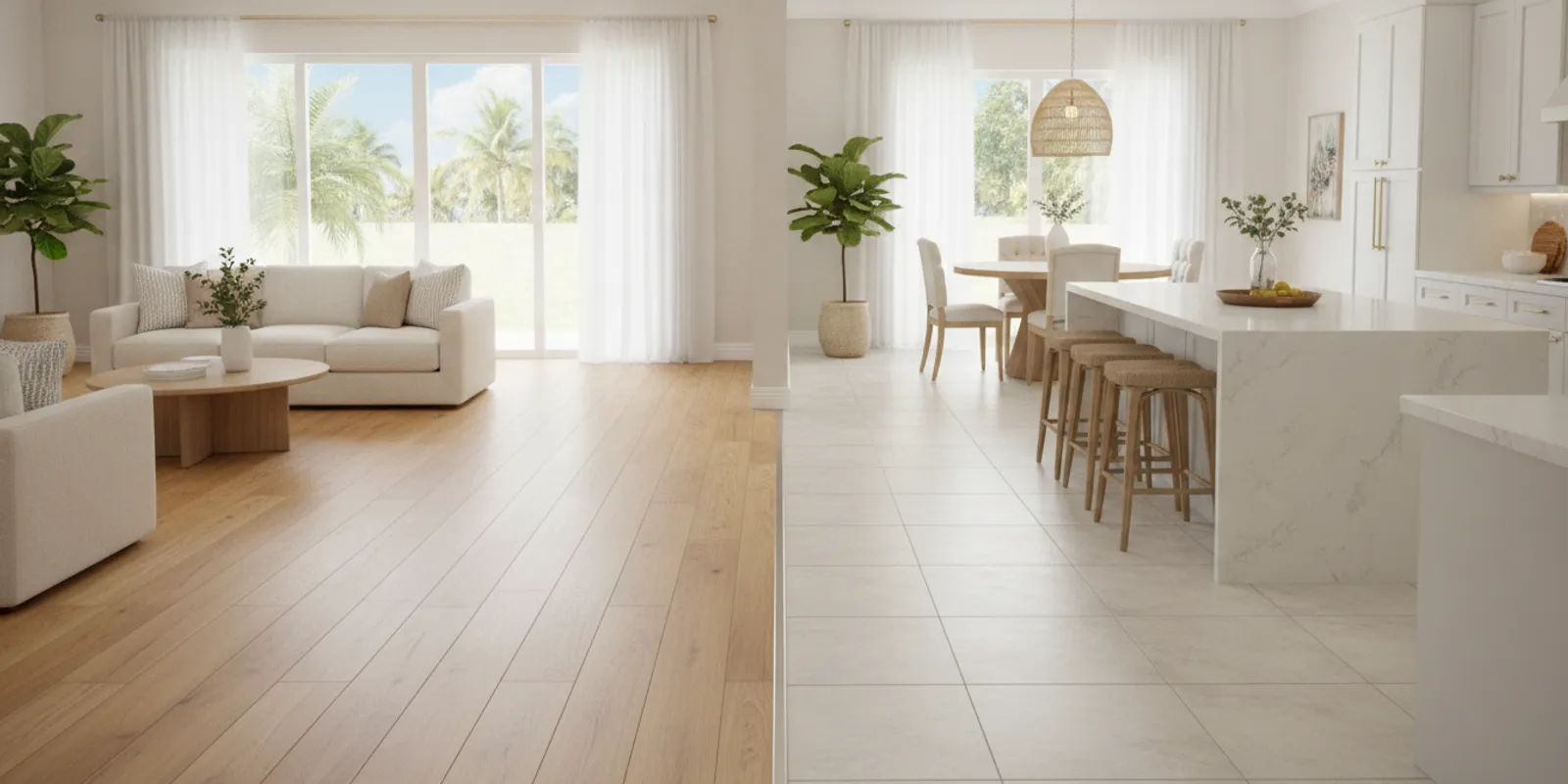
Choosing between luxury vinyl plank vs tile comes down to more than appearance. The right fit depends on the room, what happens on the floor each day, how much comfort matters, and the product and installation details. Here is a practical way to compare the two before you choose samples or plan a project.
Call to discuss your flooring project
What is the basic difference between luxury vinyl plank and tile?
Luxury vinyl plank (LVP) is a manufactured flooring product made in plank shapes, often with a printed design intended to resemble wood or another surface. Tile flooring is available in different materials and formats. Ceramic and porcelain are common hard-surface options, while natural stone and other tile types have their own characteristics. It is important not to treat every tile or every LVP product as identical.
Both options can offer a wide range of looks. LVP may be worth considering if you want a plank layout and a surface that feels less hard underfoot than many tile floors. Tile may appeal if you prefer a rigid, hard surface and the visual possibilities of tile shapes, patterns, or grout lines. Product construction, finish, installation method, and care instructions vary, so compare the exact products rather than relying only on category labels.
A Colorado Division of Housing selection guide lists luxury vinyl plank and luxury vinyl tile among flooring options for interior selection. That is useful context for the product category, but your room conditions and the manufacturer's guidance still matter when choosing a specific floor: review the interior flooring selection guide.
How should moisture affect the choice?
Moisture deserves careful attention in South Florida homes, but it does not make one broad product category right for every room. Some LVP products are marketed as waterproof or water-resistant, while performance depends on the specific product and the installed system. Check the manufacturer's stated limits and warranty conditions. Do not assume that a waterproof surface stops a leak, protects every seam, or solves moisture under the floor.
Tile is also not one uniform moisture solution. The tile material, grout, substrate, installation, and maintenance all affect how the completed floor handles water and routine cleaning. A tile surface may be appropriate for a room where spills are common, but water can still affect joints, edges, or the underlying assembly. Ask what the complete floor system requires rather than comparing only the face of a plank with the face of a tile.
Before deciding, note where water is likely to come from: tracked-in rain, splashes near a sink, pet bowls, or a plumbing concern. If there is an active leak or water damage, flooring selection does not replace addressing the source and assessing the affected floor and subfloor. Water-resistant or waterproof flooring is not a remedy for an underlying moisture problem.
Which floor may feel better in everyday use?
Comfort is personal, but the difference in feel is easy to consider. Many people find LVP more forgiving underfoot than a rigid tile surface, especially when standing for a while. Tile often feels firm and cool. That can be appealing in a warm climate, though the same feel may be less comfortable if you spend long periods standing or prefer a softer surface.
Think about the people, pets, and furniture in the room. Children playing on the floor, a household member who stands while cooking, and frequent movement between rooms may make underfoot feel more important. Area rugs can change the feel of either floor, but their placement, backing, and cleaning needs become part of your plan. Also consider whether a hard, firm surface is a feature you want or a daily drawback.
How do cleaning and upkeep compare?
Both floors need regular care, but the routine is shaped by the specific finish and installation. LVP typically calls for sweeping or vacuuming with an appropriate setting and cleaning with products allowed by its manufacturer. Avoid assuming every plank accepts the same cleaner or that every product tolerates standing water. Check care guidance for the exact line under consideration.
Tile floors also need routine sweeping and cleaning. Grout joints may require additional attention, and the suitable care can depend on the tile and grout materials, sealers, and cleaning products. Natural stone has different care considerations from many manufactured ceramic or porcelain tiles. Ask how the chosen surface should be cleaned and whether any periodic maintenance is recommended.
For either option, grit can dull or scratch a finish over time, and spills are easier to manage when cleaned promptly. Use entrance mats where appropriate, protect floors when moving furniture, and follow the manufacturer's instructions. If a household includes pets or young children, ask for product-specific information about scratch, stain, and wear performance instead of assuming a category-wide guarantee.
What appearance and room details should you compare?
LVP is commonly selected for wood-look patterns, but print variation, plank width, surface texture, and color can differ noticeably among products. Tile can provide stone, concrete, or other visual effects, as well as varied shapes and layouts. Grout color and joint width influence the final appearance. A small sample does not always show how a pattern repeats across an entire room.
Look at samples in the light where the floor will be installed. South Florida daylight can make a color look different from how it appears under showroom lighting or at night. Compare samples near cabinets, wall colors, counters, and adjacent flooring. If you want to see a tile example, review this white tile product page as one visual reference, not as confirmation of current stock or suitability for your project.
Room size and transitions matter too. Plank direction, tile format, doorway locations, and the height of nearby floors can affect how the finished space reads and connects. Look at the whole route between rooms, not only the center of the room you are updating. Specialty Flooring's flooring gallery can help you consider different finished-floor looks, while each project still needs its own material and scope discussion.
What should you know about installation?
Installation is not interchangeable between LVP and tile. LVP systems may use different attachment methods, and manufacturer instructions determine what preparation is required. The condition and flatness of the subfloor, the selected product, room shape, and transitions all affect planning. A floating floor may have different preparation and edge requirements from a product installed by another method.
Tile installation involves its own substrate and setting requirements, along with layout, cuts, grout, and transitions. The chosen tile format and pattern can affect the amount of detail involved. Neither option should be chosen on the assumption that the existing floor is automatically ready to cover. Ask whether removal, floor preparation, repairs, or other work is needed and make sure those items are clearly scoped.
When comparing estimates, look beyond the material name. Confirm what product is specified, which rooms are included, how existing flooring and furniture are handled, what preparation is anticipated, and how transitions and finishing details are addressed. Removal, repairs, and installation are separately scoped services unless your written project scope says otherwise. A free in-home estimate can help assess room-specific conditions; requesting an estimate is not a confirmed appointment.
Which option may suit your room and routine?
Use the following questions to narrow the choice, not to substitute for product instructions or an assessment of the room:
Prioritize a plank look and a somewhat more forgiving feel? Compare LVP samples and check the exact product's moisture, care, and installation guidance.
Prefer a firm surface, tile pattern, or grout-line design? Explore tile materials and formats, and ask about grout care and installation needs.
Have a room with frequent spills or moisture exposure? Verify the full system's suitability and limits, including edges, joints, subfloor, and warranty conditions.
Updating connected rooms? Compare adjoining heights, transitions, color, and layout before choosing each surface separately.
Unsure about the existing floor? Have its condition and preparation needs considered before selecting a replacement product.
For homeowners, builders, and designers, the useful answer may differ by room. One project could call for LVP in one area and tile in another, provided the materials, transitions, and written installation scope suit the spaces. Do not choose only by the room label; traffic, spills, care preferences, lighting, and subfloor conditions also shape the decision.
What should you bring to a showroom or estimate discussion?
Bring room measurements if you have them, photos of doorways and adjacent flooring, and a short list of concerns. Include who uses the room, whether pets or children are present, where spills occur, how much maintenance you are comfortable with, and which colors or styles you prefer. Mention any known floor damage or moisture history rather than assuming the new finish will address it.
At the Pompano Beach showroom, physical samples and design guidance can help you compare options in person. You can check the showroom location and visit details before planning a visit. If you are weighing both categories, ask to compare specific product specifications and care instructions side by side, then discuss the rooms and installation scope for your project.
Talk with the flooring team about your options
The best choice is the product and installation plan that fit the room, your household's routine, and your maintenance preferences. Compare real samples and product guidance, then confirm the project conditions before you decide.


