

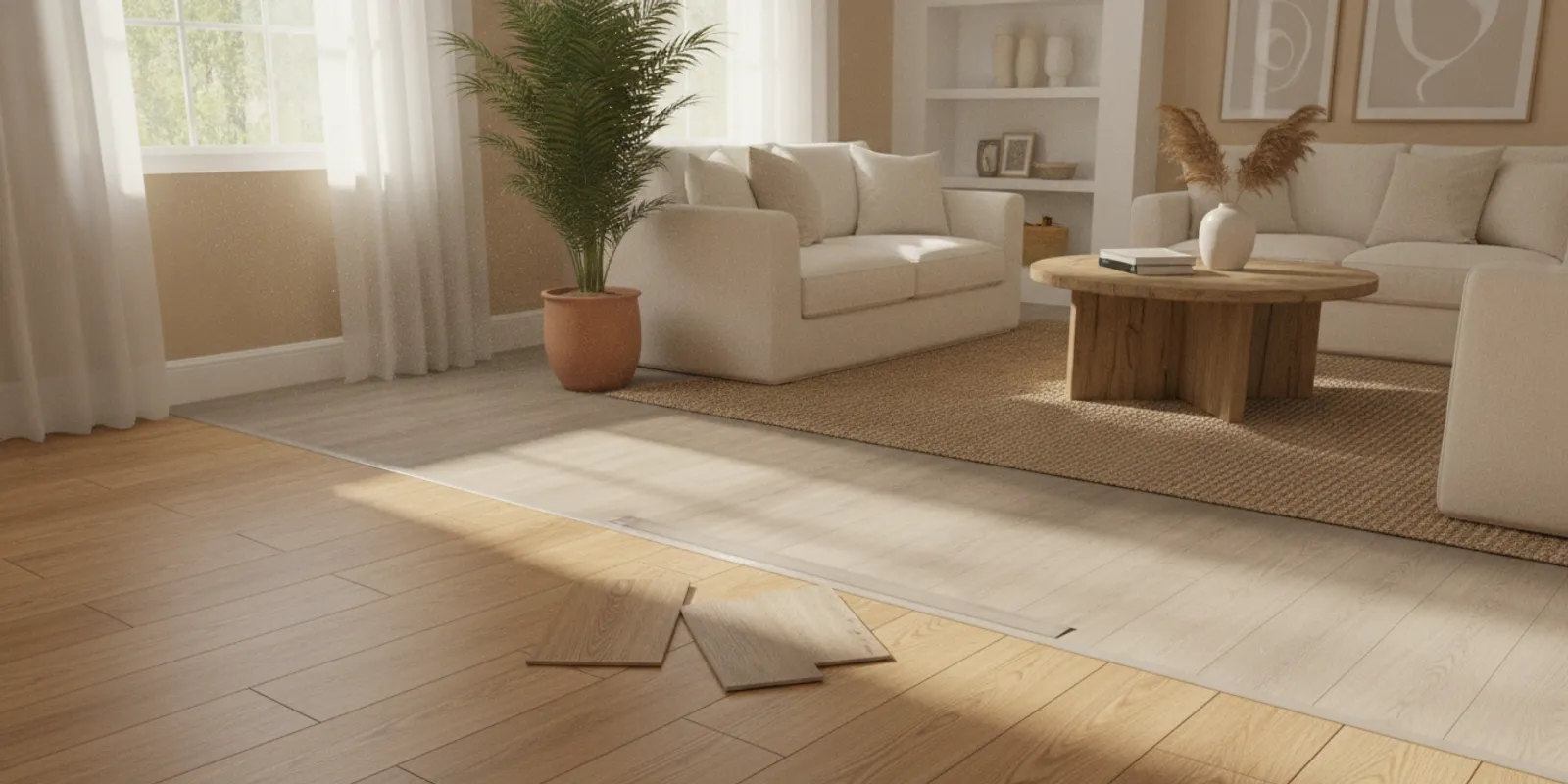
When comparing laminate vs vinyl flooring, start with the room and the way your household uses it. Both can offer wood-look designs, but their construction, response to moisture, feel underfoot, and product-specific features differ. The right choice depends on the exact product and the conditions it will face.
Call to discuss your flooring project
What is the basic difference between laminate and vinyl?
Laminate flooring typically has a decorative image layer beneath a clear protective surface, attached to a core and backing. Its appearance can resemble wood or stone. The precise layers and performance depend on the product. A Utah State University Extension housing and interior design booklet describes laminate as a flooring layer with a photographic applique under a clear protective layer. Read the booklet's laminate description.
Vinyl flooring is made with vinyl-based layers and is sold in several formats, including luxury vinyl plank and tile. Some vinyl products are designed for wet or moisture-prone spaces, but performance is product-specific. Look beyond the category name: the product's construction, installation instructions, and warranty language matter.
How should moisture affect the choice?
Moisture is often the first point of comparison, especially in kitchens, bathrooms, laundry rooms, and homes where spills are common. Some vinyl products are marketed as waterproof or water-resistant. That does not mean every vinyl floor has the same rating, or that water cannot pass through seams, edges, or an installation detail.
Laminate products also vary. Some include features intended to improve water resistance, but do not assume that every laminate can tolerate standing water or repeated wetting. Check the manufacturer's instructions for permitted rooms, spill cleanup, edge protection, and any time limits for moisture exposure.
Neither flooring type fixes a leak, protects a damaged subfloor, or resolves mold or an underlying moisture problem. Address the source and assess the floor beneath before choosing a replacement. For a room with frequent splashes, compare the written product requirements and discuss the room conditions before making a decision.
Which option suits your household's wear and routine?
Kids, pets, shoes, furniture, and daily foot traffic all affect how a floor looks over time. Both laminate and vinyl products have protective wear layers, but their resistance to scratches, stains, dents, and fading varies by product. A broad label is not a performance guarantee.
For pet claws and chair movement: Ask about the specific wear layer and care guidance. Use furniture protectors where recommended, and avoid dragging heavy items across either surface.
For food and drink spills: Find out how quickly spills should be cleaned and whether liquid can affect seams or edges. Follow the product's cleaning instructions.
For busy entryways: Consider grit and sand from shoes, use suitable mats, and ask how the finish responds to routine cleaning.
For a quiet, comfortable room: Compare samples underfoot and ask whether an underlayment is required or permitted. Do not assume all products feel or sound alike.
Think about the whole household routine, not just a product's advertised durability. A sample can help you compare texture and appearance, while written specifications help answer questions about wear and care.
For example, a family comparing floors for an entry and kitchen may prioritize quick spill cleanup and ask how seams should be protected. For a bedroom or living area with fewer wet messes, appearance, feel, and the chosen product's care needs may weigh more heavily. These are starting points, not rules: the manufacturer's room guidance and your installation conditions still matter.
How do appearance, comfort, and cleaning compare?
Laminate and vinyl both offer a range of wood- and stone-inspired looks. Printed patterns and surface textures differ from one product to another. Check samples in the room's natural and evening light, and compare them with cabinets, trim, and nearby flooring. A showroom sample can help you see color and texture in person, but it cannot predict the exact look under every lighting condition at home.
Cleaning requirements also depend on the product. Many floors call for regular sweeping or vacuuming with a suitable setting and damp cleaning with an approved method. Some finishes or seams may be sensitive to excess water, abrasive tools, or certain cleaners. Read the care instructions before buying so the maintenance routine fits your household.
When comparing samples, look at more than the color name. Check the surface texture, plank or tile dimensions, and how the pattern repeats across several pieces. Ask whether the sample represents the product and finish being considered. If you can, view it in the actual room at different times of day; a small showroom sample and a large installed floor can create different visual impressions.
What should you know about installation?
Installation starts with the floor beneath the new material. Subfloor condition, moisture, flatness, transitions, and the layout of adjoining rooms can affect preparation and the finished result. Product instructions may specify acclimation, underlayment, expansion space, or other requirements. These details are not identical across laminate and vinyl products.
Ask what preparation is included in the proposed scope, whether old flooring needs removal, how transitions will be handled, and what the product's installation instructions require. Removal and installation may be separate project services, so confirm the work and any related costs in the written estimate. Do not assume that a floating floor can go over every existing surface.
For a sense of how flooring looks in completed spaces, browse the flooring project gallery. Examples can help you discuss styles and project details, but they do not establish that a specific product is available today or that every home has the same installation conditions.
What should you compare before choosing?
Bring the room conditions and your practical questions into the selection process. For each product under consideration, review:
Room suitability: Which rooms does the manufacturer approve, and what moisture precautions apply?
Wear and care: What cleaning products and routine does the manufacturer recommend? What product-specific wear or stain coverage is described?
Installation details: What subfloor preparation, underlayment, transitions, or expansion allowances are required?
Appearance: How does the sample look beside your cabinets, furniture, and existing finishes in the room's lighting?
Project scope: Does your estimate explain removal, preparation, installation, and finishing as applicable?
Specialty Flooring Inc. is a family-owned flooring retailer with a Pompano Beach showroom where homeowners and project professionals can compare material samples and discuss project needs. The showroom's location and visit information can help you plan an in-person conversation. Free in-home estimates are also offered; requesting one is not a confirmed appointment.
Which floor is right for your room?
Vinyl may be worth a closer look when the product's stated moisture performance fits a room with routine splashes. Laminate may suit a room where its look and product specifications match the household's use and care habits. Neither category wins every comparison. Choose by the specific product, room conditions, installation needs, and written guidanceânot by a broad claim about all laminate or all vinyl.
Plan a visit to compare flooring samples
Bring measurements, photos, and questions about traffic, pets, spills, and subfloor condition so the discussion can focus on what your home needs.


