

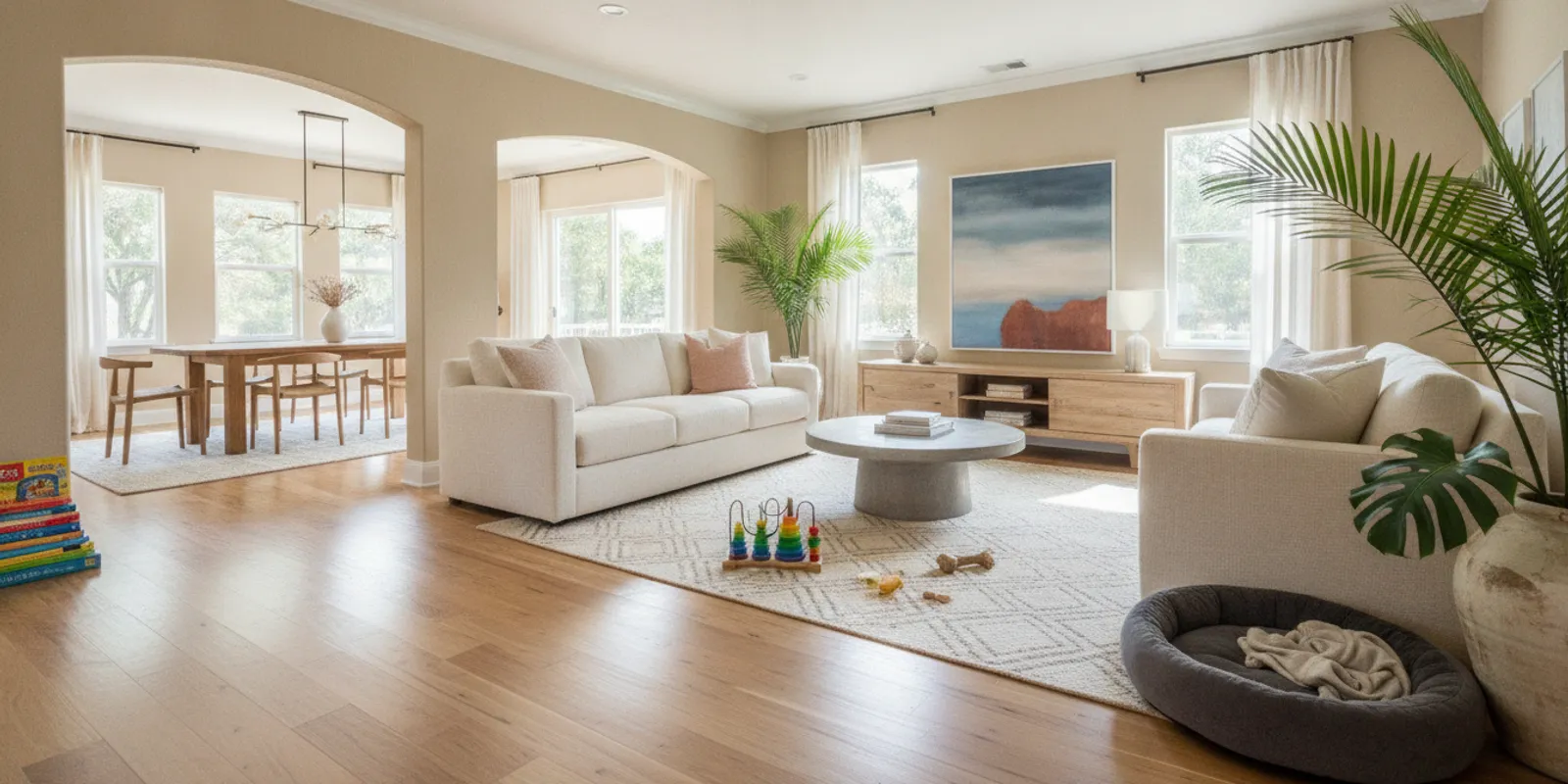
Choosing durable flooring for a busy home starts with the way each room is used, not with a single material label. Foot traffic, pets, spills, sunlight, cleaning habits, and the condition of the subfloor all affect how a floor performs over time. A little planning helps you compare products on the details that matter in your home.
Call to discuss your flooring project
What does “durable” mean in your home?
Durability is not one universal rating shared by every product in a category. A floor may resist everyday scuffs but still need prompt cleanup after spills. Another may be easy to maintain yet show scratches more readily. Check the manufacturer’s specifications for the exact product, including its stated resistance, care instructions, installation requirements, and warranty terms. Do not assume that every product described as waterproof or scratch-resistant offers the same protection.
Start by listing the jobs a room’s floor has to handle. An entry may collect grit and moisture from shoes. A kitchen sees frequent walking, dropped items, and spills. A bedroom may have lighter traffic but more direct sunlight. A family room might need to accommodate pets, children, furniture, and regular cleaning. The right comparison depends on the room’s use and the household’s priorities.
Compare flooring materials by room and routine
Hardwood, laminate, luxury vinyl, carpet, tile, natural stone, and other options each bring different care needs and product-specific performance. Use the material name as a starting point, then compare the particular product and installation plan.
Hardwood: Consider the room’s moisture conditions, expected traffic, finish, and maintenance preferences. Ask what care the selected product requires and how the floor should be protected from spills and grit.
Laminate: Review the product’s wear and care information, and ask how it is suited to the intended room. Do not treat all laminate as equally resistant to moisture or surface damage.
Luxury vinyl and waterproof flooring: Verify the exact product’s water-related claims and installation instructions. A flooring surface does not repair a plumbing leak, stop water intrusion, or resolve a subfloor problem.
Tile and natural stone: Ask about the particular material’s cleaning needs, surface finish, grout, and installation requirements. Those details can matter as much as the appearance.
Carpet: Compare fiber, construction, color, and the manufacturer’s cleaning guidance. Think about where tracked-in dirt or frequent spills are most likely.
Consider transitions between rooms, too. A home may use different materials in a living area, bedroom, and bath. Before selecting products, discuss how the edges meet, whether existing flooring must be removed, and what preparation the subfloor may need. Installation and removal are separate project scopes unless your written estimate says otherwise.
How should pets, children, and spills affect the choice?
For pets and children, think beyond scratch resistance. Claws, toys, tracked-in grit, spills, and cleanup routines can each affect a floor differently. A textured or patterned surface may make some everyday marks less noticeable, but it does not prevent damage. Ask how to clean the exact product and whether the recommended cleaner or method differs from what you already use.
In a spill-prone area, clarify what the product’s water-resistance or waterproof wording covers and what it does not. Ask how quickly spills should be cleaned, whether seams or edges need special attention, and which rooms are appropriate for that product. Water-resistant flooring cannot stop an active leak or guarantee that water will not reach the subfloor.
For busy entrances, place mats where practical and establish a routine for removing grit. Felt pads under movable furniture can help reduce scraping. Follow the product maker’s care guidance rather than relying on a generic cleaning tip, especially for stone, hardwood, and specialty finishes.
Check the product details, not just the category
When comparing samples, look for the product’s technical information and ask direct questions. Is the stated performance claim tied to a specific finish or collection? What cleaning products are permitted? Are there limits for moisture or room placement? What does the warranty cover, and what conditions or exclusions apply? The answers should be specific to the product being considered.
Independent testing can also help you understand what is being evaluated, while still leaving the final choice to your home and product specifications. Consumer Reports’ flooring tests compare options for attributes such as durability, scratch resistance, stain resistance, and fading. Testing one product is not a guarantee about every product in its category, so check the details for the flooring you are considering.
It can be useful to examine an individual product listing as a starting point for questions. For example, you can review a Kronotex laminate product listing, then confirm its current specifications and suitability with a flooring professional. For broader visual ideas, browse flooring inspiration from Specialty Flooring. A listing or image is not a confirmation of current stock or a substitute for product documentation.
Bring the room conditions into your selection
Before settling on a color or surface, compare samples in the room where they will be installed. Look at them in morning and evening light, beside cabinets or furniture, and next to the home’s existing finishes. Lighting can change how a color appears, while a sample helps you judge texture and scale more realistically than a screen image.
Make a short project checklist for each room: who uses it, how much traffic it gets, what spills or moisture are likely, how much maintenance you are comfortable with, and whether the current floor needs removal. If several rooms connect, note where you want materials to continue or change. These specifics give a showroom conversation or in-home estimate a practical starting point.
Specialty Flooring Inc. is a family-owned flooring retailer with a showroom in Pompano Beach, where you can discuss materials and project needs. Free in-home estimates are available; requesting one is not a confirmed appointment. Installation, removal, repair, and other project services should be reviewed as separate scopes so you understand what is included in your project.
Explore flooring ideas for your home
The most durable flooring choice is the one whose documented performance, care needs, and installation plan make sense for the rooms and routines you have. Compare specific products, ask about their limits, and make the decision with your actual project conditions in view.


