

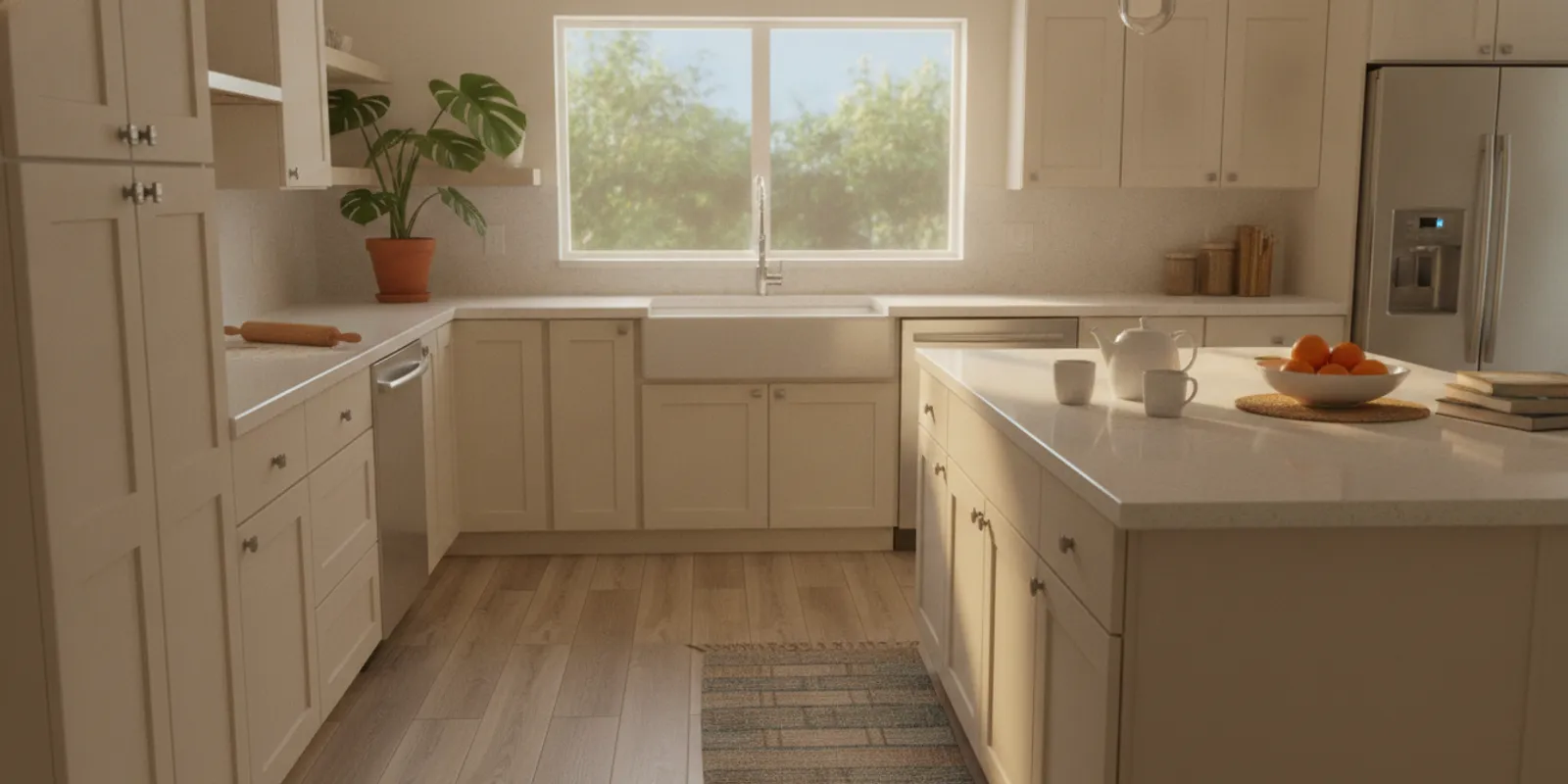
Choosing the best flooring for kitchens means looking beyond color. A kitchen sees spills, frequent movement, dragged chairs, dropped utensils, and regular cleaning, while South Florida homes also need careful thought about humidity and moisture. The right choice depends on how you use the room, the product’s documented features, and the conditions beneath the floor.
Call to discuss your kitchen flooring
What should kitchen flooring handle?
Start with the room’s daily routine. A kitchen used for quick meals has different demands from one where family members cook, gather, and move between the sink, refrigerator, and patio throughout the day. Make a short list of what matters most before comparing materials.
Spills and splashes: Water near a sink or dishwasher is different from a leak that reaches the subfloor. Wipe spills promptly and address the source of any leak; flooring alone does not solve water intrusion.
Foot traffic: Consider how often people cross the kitchen and whether shoes, pets, or outdoor access add grit.
Pets and children: Think about dropped food, bowls, toys, and the cleaning routine you can maintain.
Comfort: If you stand while preparing meals, the feel of the floor underfoot may matter as much as its appearance.
Care: Compare the product’s cleaning instructions, seams, surface texture, and any maintenance such as stone sealing.
Light and style: View samples in the kitchen at different times of day. Window light, cabinet color, and existing counters can change how a floor looks.
Which flooring materials are worth comparing?
There is no single material that suits every kitchen. Product construction, installation requirements, and manufacturer guidance matter, so treat broad category names as a starting point rather than a performance guarantee.
Luxury vinyl and waterproof flooring
Luxury vinyl is available in plank and tile looks, and some products are marketed as waterproof. Check the exact product documentation: a waterproof surface does not mean the whole floor assembly, seams, subfloor, or adjoining rooms are protected from every water event. Ask how the product is intended to be installed and what care it requires.
Tile
Tile offers many colors, shapes, and patterns, including ceramic or porcelain options and decorative designs. Ask about the specific tile’s surface, grout maintenance, installation preparation, and suitability for your household. Natural stone and glass tile have their own material and care considerations, so review those separately rather than assuming they behave like every other tile.
Hardwood
Hardwood can bring warmth and a natural grain to an open kitchen and living area. In a kitchen, plan for quick spill cleanup and discuss moisture conditions, installation method, and the product’s care guidance. The room’s use and the specific wood product should inform the decision.
Laminate
Laminate can offer a range of wood-inspired looks. Its response to moisture depends on the particular product and installation details. Confirm the manufacturer’s instructions for spills, wet cleaning, edges, and placement near sinks or appliances before choosing it for a kitchen.
Carpet and area rugs
Wall-to-wall carpet is uncommon in the main food-preparation zone because crumbs and spills can add cleaning work. An area rug may add softness in a defined spot, but choose one that is practical for the location and secure it appropriately. Check how it will be cleaned and whether it could interfere with doors or create a trip concern.
How should Florida conditions affect the decision?
Humidity is part of the setting, but it is not a reason to assume every home or room has the same moisture conditions. Air conditioning, ventilation, plumbing, sunlight, and the subfloor all affect the project. A flooring label alone cannot diagnose a leak or a moisture issue beneath an existing floor.
Before selecting a material, note whether the kitchen has had past leaks, visible swelling, loose tiles, or persistent dampness. Share those observations during an estimate discussion. If there is an active leak or suspected underlying damage, have the source and affected area assessed; replacing the visible surface is not a substitute for resolving the cause.
For additional context on material choices in the region, read this guide to moisture-resistant flooring considerations in South Florida. It can help frame questions, but the selected product’s written specifications and the conditions at your home should guide the project.
For general indoor moisture guidance, the U.S. Environmental Protection Agency explains how to control moisture and address dampness in buildings: EPA guidance on mold and moisture. This supports the practical point that persistent moisture should be addressed at its source, rather than treated as a flooring-material issue alone.
What details should you compare before choosing?
Use the same questions for every candidate so that you compare like with like. Bring room dimensions or photos if available, and identify any adjoining rooms where the flooring may meet another surface.
Product-specific moisture guidance: What does the manufacturer say about spills, standing water, humidity, and cleaning?
Surface and wear information: What is the product designed for, and what limitations or maintenance does its documentation describe?
Installation scope: Does the project involve removing an existing floor, preparing the subfloor, transitions, trim, or moving appliances? Confirm what is included in the written estimate rather than assuming services are bundled.
Repair considerations: Ask how damage may be addressed and whether a repair would involve replacing a section or more extensive work.
Visual fit: Compare samples beside cabinets and counters, in both daylight and evening lighting.
For wood options, review the hardwood flooring selection and discuss the room’s use. For hard-surface alternatives, explore tile choices. Product pages and samples help narrow the look, but do not establish current stock or suitability without checking the exact item.
How can you make the choice manageable?
First, rank your priorities: moisture concerns, easy routine care, comfort, appearance, or continuity with nearby rooms. Next, eliminate options whose product instructions conflict with your household’s habits. Then compare a small set of samples in the actual kitchen, not only under showroom lighting.
Finally, discuss the project itself. An estimate can account for the room and work being considered, but it is not a confirmed appointment until arrangements are made. Specialty Flooring Inc. is a family-owned flooring retailer with a showroom in Pompano Beach, where customers can explore materials and ask questions. Nearby service eligibility may depend on the project and should be confirmed.
Learn about flooring removal for a replacement project
What should you bring to a showroom or estimate discussion?
Photos of the kitchen, cabinets, counters, and adjoining rooms.
Approximate room dimensions and notes about doorways or transitions.
Details about pets, children, cooking habits, and how often spills are cleaned.
Any known history of plumbing leaks, dampness, or flooring repairs.
A short list of preferred looks and the care you are comfortable doing.
With those details, you can compare materials on practical terms instead of choosing by appearance alone. Ask for product-specific guidance and a clearly defined project scope before deciding which kitchen floor fits your home.


