

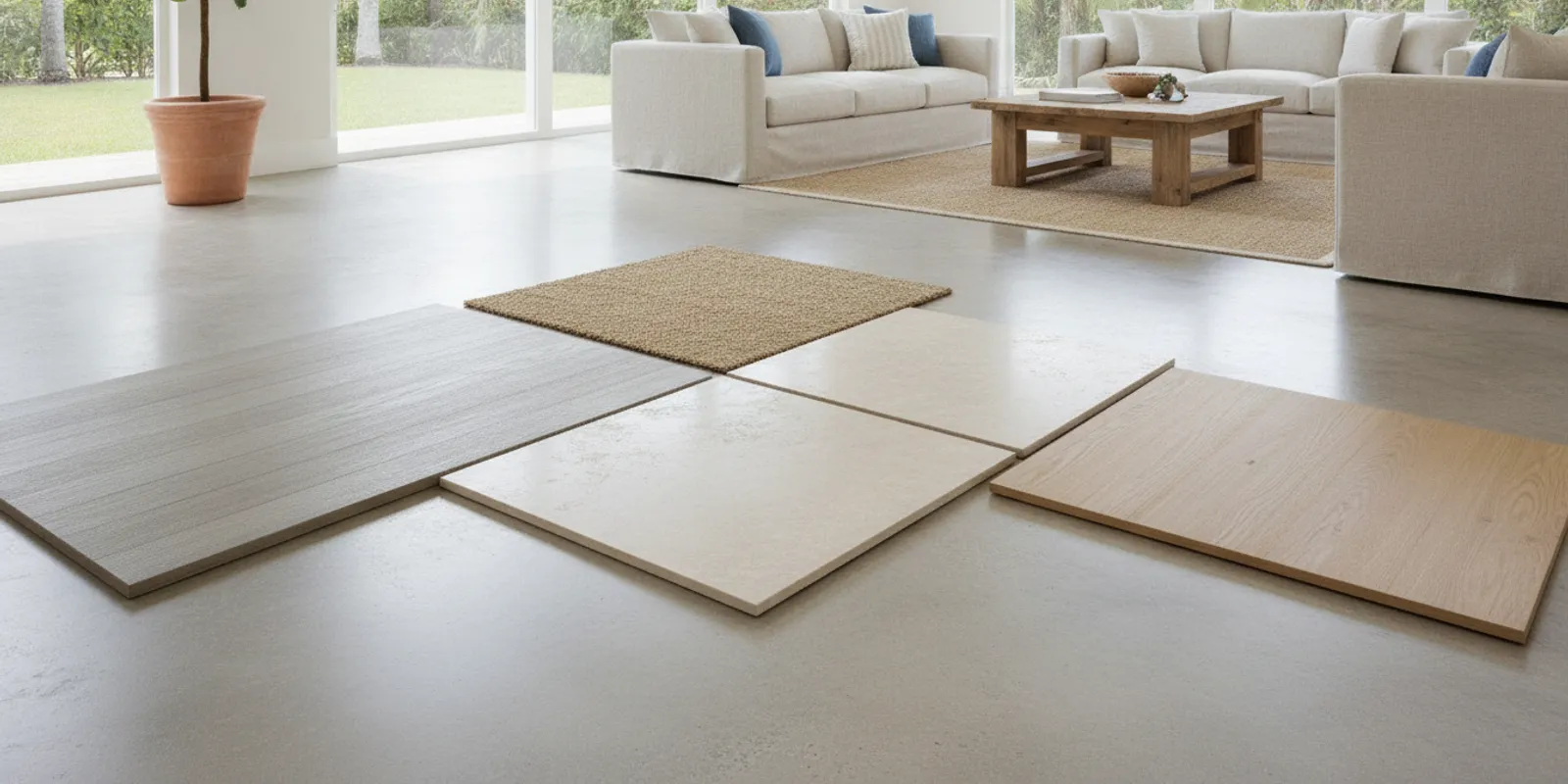
Choosing flooring Florida homeowners can live with starts with the conditions in each room, not a trend. Sunlight, ventilation, spills, foot traffic, pets, and the subfloor all affect what to compare. A floor that suits a dry bedroom may not fit an entry or kitchen. Begin with room-by-room needs, then review the product's own care and installation information before making a decision.
Call to discuss your flooring project
Florida room conditions
Make a room list before looking at samples. Note the existing surface, approximate area, direct sunlight, traffic, transitions to other rooms, and visible damage or unevenness. Also note how each room is used throughout the day. An entry may collect grit and wet shoes, while a living area may need to coordinate with furniture and changing natural light. Specialty Flooring's room and Florida home flooring selection guidance is a useful starting point for organizing those questions.
Entryways and hallways: Consider grit, wet shoes, and repeated foot traffic.
Kitchens and dining areas: Think about spills, chair movement, and care instructions.
Bedrooms: Comfort, texture, appearance, and maintenance preferences may carry more weight.
Living areas: Look at sunlight, furniture placement, and transitions to connected rooms.
For connected spaces, decide whether a continuous look matters to you. Then check whether the same product is suitable for all those rooms under its specific instructions. A consistent appearance does not mean every room has identical exposure or use.
Moisture and ventilation
Florida's climate makes moisture worth discussing, but a product labeled “waterproof” does not fix a leak, standing water, mold, or a damaged subfloor. The claim applies to a particular product and set of conditions. Installation details, seams, edges, room conditions, and instructions also matter. Ask what the claim covers and what it excludes before comparing options.
First identify the pattern. Is the concern an occasional splash near a sink, wet shoes by an exterior door, or recurring dampness? If there is a persistent odor, visible damage, or ongoing water entry, address the source rather than treating flooring as the solution. Note rooms that stay damp and discuss ventilation and subfloor concerns before choosing material or planning installation.
For a room with moisture concerns, ask the retailer or installer:
What limits apply to spills, standing water, and routine cleaning for this exact product?
Are moisture testing, subfloor preparation, or acclimation required?
What expansion gaps, transitions, or perimeter details does the installation call for?
Which care products and methods are allowed by the manufacturer?
Hardwood can be an appealing choice, but construction, finish, site conditions, and installation requirements vary. Review the documentation for the specific product, and explore the company's hardwood flooring information as one starting point for a product discussion.
For general home moisture guidance, the U.S. Environmental Protection Agency explains that controlling moisture is central to mold prevention; see its mold and moisture resource. This does not replace investigating a particular leak or getting advice on a flooring product and subfloor.
Traffic and maintenance
Count more than household members. Include pets, visiting family, rolling chairs, furniture, and the route from the outside door to the kitchen. A busy household may prefer a surface that is simple to care for, but scratch, stain, and wear performance varies by product. Read the product details for the exact option rather than assuming the whole category behaves the same way.
Be realistic about routine care. Some households prefer carpet in bedrooms; others want a hard surface they can sweep. Hardwood, laminate, luxury vinyl, tile, natural stone, carpet, and area rugs each bring different care instructions and repair considerations. No material is maintenance-free. Ask what regular upkeep involves, what can damage the finish or surface, and whether a damaged section can be addressed without replacing a larger area.
Plan for furniture and rugs as well. Protective pads may be appropriate beneath furniture, and rug backing can affect the floor below. Follow product-specific recommendations for mats and cleaning. A general tip that works for one finish may not be suitable for another.
Material tradeoffs
Compare materials by the job they need to do, not by a single label. Luxury vinyl, laminate, and waterproof flooring can refer to different constructions and performance claims. Tile and natural stone raise installation, grout, and care questions. Carpet offers a different texture and underfoot feel, while hardwood has its own appearance and maintenance considerations. Verify specifications for each product you are considering.
Material family | What to compare | Question to ask |
|---|---|---|
Hardwood | Construction, finish, room conditions, and care | What site preparation and product limits apply? |
Laminate | Wear layer, edges, and moisture instructions | Which spills or cleaning methods are restricted? |
Luxury vinyl | Core, wear layer, installation method, and claims | What does the exact water-resistance claim cover? |
Tile or natural stone | Surface, grout, subfloor, and installation details | Does this selection need sealing or particular care? |
Carpet | Fiber, pile, color, cushion, and care guidance | How should this particular carpet be maintained? |
Color and texture can look different across materials and finishes. A pale surface may make a room feel brighter, while a darker one may show dust or lint differently. A small screen image may also give a different impression from a larger sample in a room. Compare physical samples in the lighting where they will be installed, and ask about product details separately from appearance.
Showroom sample checklist
Bring useful information so the discussion can focus on your home rather than guesswork. Specialty Flooring Inc. is a family-owned flooring retailer with a Pompano Beach showroom where you can compare samples and discuss options. Before visiting or requesting a free in-home estimate, prepare:
Room notes: List each room, approximate dimensions, existing floor, and how the space is used.
Photos: Take pictures in daylight and evening light, including transitions and areas of concern.
Household needs: Note pets, children, mobility needs, and expectations for routine care.
Project scope: Clarify whether the project includes one room or several and whether existing flooring may need removal.
Product questions: Ask for exact product details, care instructions, installation requirements, and applicable warranty documentation.
Estimate details: Ask what the estimate includes, what preparation may be separate, and what must be confirmed before the scope is final.
Look at samples beside your paint, cabinets, or furniture colors when possible, and check them in natural and artificial light. A sample helps with color and texture, but does not establish installation suitability or performance. Confirm those points against product documentation and the actual project conditions. If removal is part of your planning, review the company's flooring removal information; that service should be discussed as part of the specific project scope.
Choosing flooring for a Florida home becomes more manageable when each room has a clear purpose, moisture concerns are investigated, and product claims are checked against exact specifications. Bring your notes and samples to a showroom conversation or request an estimate; an estimate request is not a confirmed appointment.


